Barak Pierson grew up in the Quaker community of Springdale, Iowa, raised by his widowed mother, Deborah. As a boy, he trapped gophers for bounty, fifteen cents a tail from the county, ten cents from local farmers, and used the money to buy a heavy cast-iron jigsaw. The saw weighed nearly fifty pounds and had to be carried the last twenty miles home from the train station on horseback.
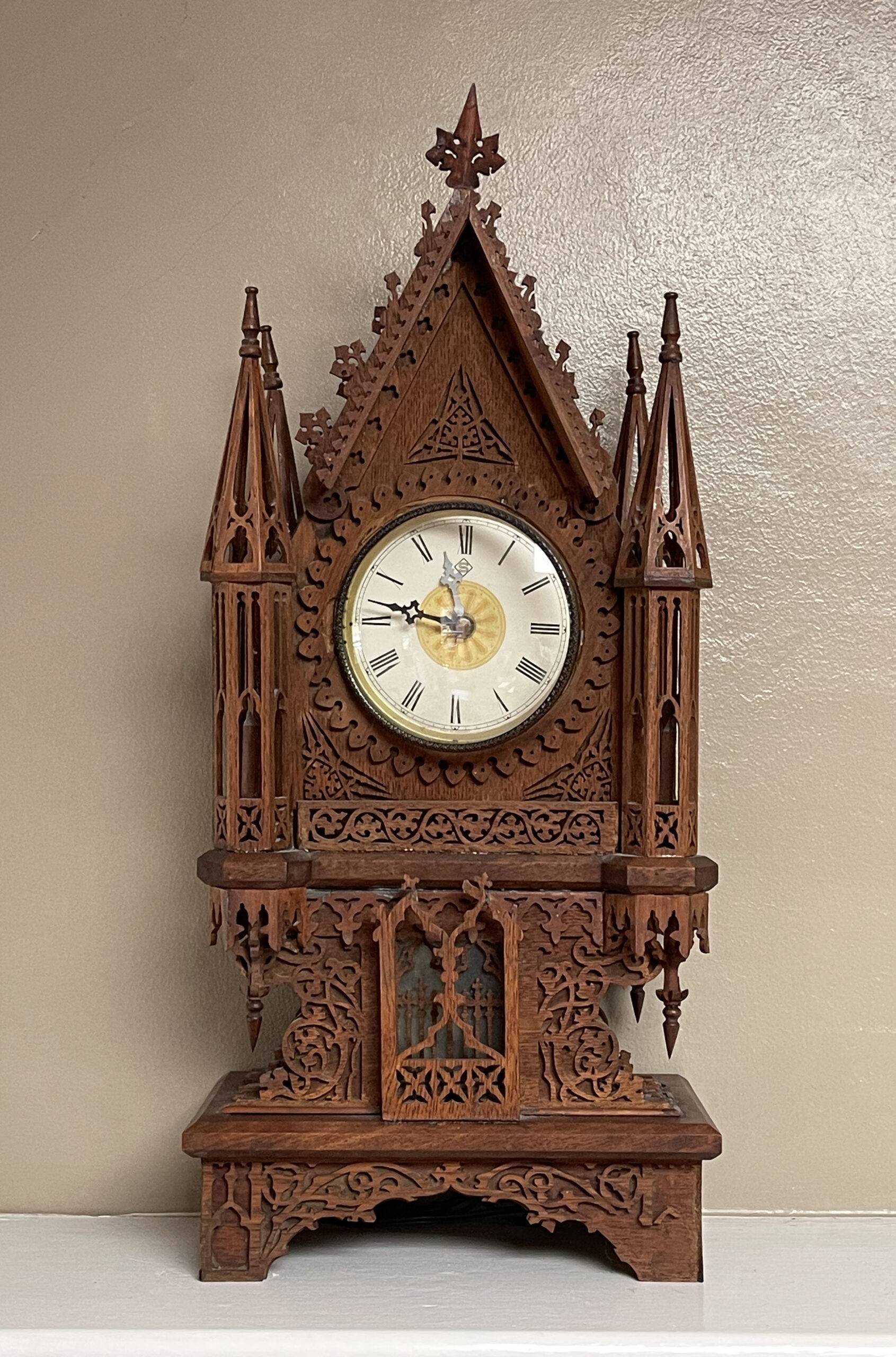
The family moved to Barclay, Kansas around 1879, another Quaker settlement, and it was there that Barak met Libbie Mercer, whose own family had come from nearby Le Grand, Iowa. Libbie had been giving elocution recitations since she was a girl, standing on a box to be seen, and Barak, by his own account smitten, decided to build her something extraordinary for a wedding present: an ornate cathedral clock, cut by hand from over 800 tiny pieces. It took him more than a year.
They married on May 3, 1883, at Libbie’s parents’ house in Barclay. A local newspaper listed every gift they received; the “scroll work clock” led the list.
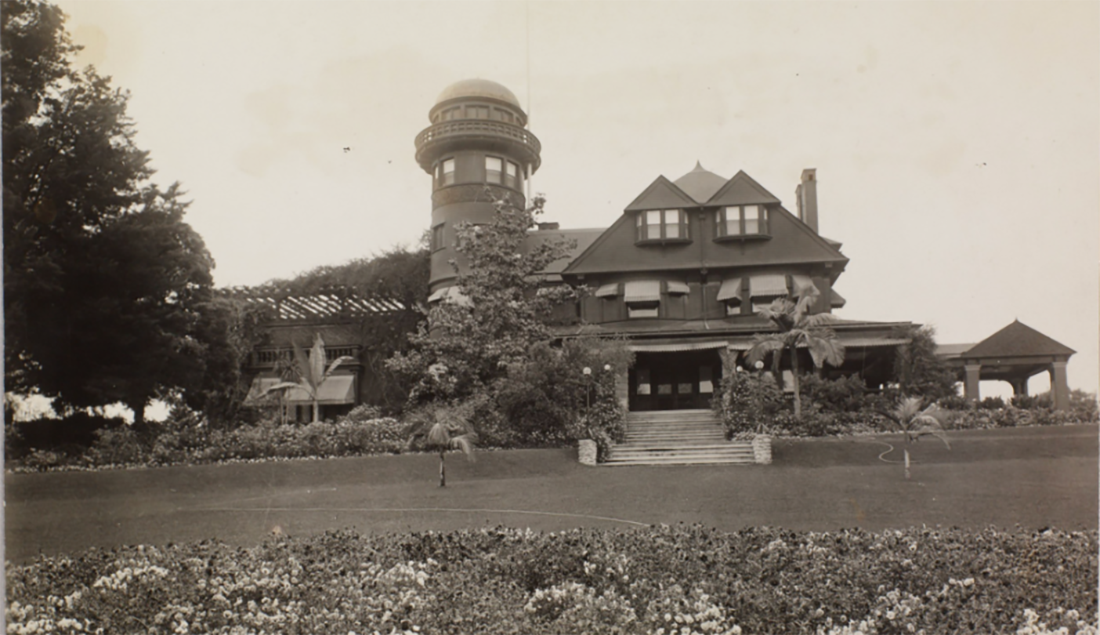
By the mid-1880s, Kansas was proving hard to farm, and in 1887 Barak, Libbie, and their growing family joined thousands of newcomers moving to Pasadena, California, part of a real estate boom then reshaping the town. Barak went first, in August. Libbie followed in September with the children and her own parents.
The dry California climate was too much for the clock’s old glue. Piece by piece, it came apart, and around 1894 the family packed it away in a box.
There it stayed for nearly forty years. By the 1930s, Barak and Libbie had retired to Tulare. Their grandsons David and John, sons of George and Rena, spent days fitting and gluing the hundreds of pieces back together by hand. The story even made the newspaper. Rena later had the clock electrified.
The clock passed down through David’s family to his daughter Carol, Barak and Libbie’s great-granddaughter. It stands on her mantle in Berkeley today, more than 140 years after Barak first cut its pieces by hand. [348 words]
[Pull out] Why Pasadena?
Rena Pierson, George’s wife, recorded a family explanation for the move: Barak “had gone to help build a home for Ralph Arnold’s father,” Delos Arnold, Libbie’s brother-in-law and a former Iowa state senator thirty years older than Barak. It’s not confirmed elsewhere, but Rena likely heard it from George himself. What is documented is that Barak did work for Delos. His diary records paying Barak $12.50 in 1894, seven years after the family arrived. [Read more in “The Arnolds.”]
Sources
This entry draws on an 1867 Tipton Advertiser article on gopher-bounty rates in Cedar County, Iowa, written by Lawrie Tatum; the Osage City wedding announcement of May 1883; the Ahnentafel Chart for George Mercer Pierson, written by Rena Pearl [Waltz] Pierson; Delos Arnold’s diary; the November 13, 1934 Pasadena Star-News article on the clock’s reassembly; and family research compiled by Laura Atkins, Clarance Smith, and Vic Lewis.